Guide
Making a Casino Complaint in the UK: Operator First, Then ADR
A dispute with an online casino follows a fixed route in Great Britain: the operator first, then an alternative dispute resolution (ADR) provider. This guide explains each stage, what to keep along the way and which bodies deal with problems that are not about your account.
Updated Register read 28 October 2026
Every complaint starts with the operator
Whatever the problem — a withdrawal that has not arrived, a balance that looks wrong, a limit that did not apply, an account closed without explanation — the first complaint goes to the business that holds your account. The ADR provider will expect the operator to have had its chance to answer, and the clock that later opens the door to ADR starts with your complaint.
Use a written channel where you can, and say in the opening line that this is a formal complaint, so it is not treated as an ordinary support question. Keep it short and factual. A clear complaint usually covers the points below.
- Your username or the email on the account — never your password.
- The date and time of the event, and the game round or transaction reference.
- The amount involved and the payment method.
- What happened, what you expected to happen, and which part of the terms you rely on.
- What you are asking for: a payment, a correction, an explanation or a change to the account.
What to keep while the complaint is open
A complaint is decided on records, not on memory. From the first day, save screenshots of the balance, the transaction history and any error message; copy or download chat transcripts before the window closes; keep emails in one folder. If you speak to someone by phone, note the date, the time and what was said straight afterwards.
Support channels differ, and that affects how easy it is to keep a record. bet365 publishes live chat around the clock, a webform, social media channels and a postal address in Stoke-on-Trent. LeoVegas publishes live chat and email, without stated hours. BoyleSports lists a webform and two further channels, with hours not confirmed. For Kwiff, Buzz Casino and Casumo, support channels were not confirmed on the pages we could read on 28 October 2026 — look for them in the operator’s help centre or terms.
The eight-week point
UK operators have 8 weeks to resolve a complaint. If it is still unresolved after that, you can take it to the ADR provider named in the operator’s terms. Write down the date you first complained, because the 8 weeks run from there, and keep the operator’s final answer if you receive one.
Eight weeks is a ceiling, not a waiting period you must sit through in silence. A polite follow-up every week or two, quoting your reference, keeps the record tidy and shows that the issue was not dropped. If the operator answers in full earlier and you do not accept the answer, say so in writing and ask it to confirm the ADR provider it uses.
What ADR is and how it works
Alternative dispute resolution is a way to settle a disagreement without going to court. Each UK licence holder names an ADR provider in its terms, usually in the complaints section. The provider is a separate organisation: it asks both sides for their account of events, reads the evidence and gives a decision on your dispute. Using it is free for you.
Send the ADR provider the same pack you built for the operator: the complaint, the replies, the screenshots and the transaction history, with a short timeline on top. Explain what you are asking for in one or two sentences. The provider’s own pages explain its process and what its decision means for you and for the operator, so read them before you file.
Our casino files do not record the name of each operator’s ADR provider, so for all six licence holders in the ledger that detail is not confirmed on Zoraveli. The operator’s terms are the place to find it.
What ADR does not decide
ADR looks at one dispute between you and one operator. It is not a regulator, so it does not fine businesses, change licences or rule on how the whole market works. Some problems belong elsewhere from the start.
- A complaint the operator has not yet had the chance to answer.
- Whether an advertisement was misleading or aimed at under-18s — that is the ASA.
- How your personal data was handled — that is the ICO.
- Whether a licence holder broke its licence conditions — that is the Gambling Commission’s field.
- Payments you did not authorise — start with your bank.
Telling the Gambling Commission
The Gambling Commission does not resolve individual disputes, and it will not get your money back. You can still report a licence holder to it, because reports help the Commission see patterns. In a blog post of 18 July 2024, its chief executive described withdrawal delays as the number one subject of complaints, at around 2,000 a year, and said checks should happen before deposits rather than adding friction at withdrawal.
When the Commission does act, the result appears on the public register under the licence holder’s regulatory actions. For example, the register records, under 4 April 2024, a payment in lieu of a financial penalty of £343,035, with a public statement, by Hillside (UK Gaming) ENC, the bet365 casino licence holder, for breaches of anti-money-laundering and social-responsibility rules in 2021–2022. For the other five licence holders in our ledger, there is no regulatory action on the register for 2024–2026.
A regulatory action tells you how a licence holder has dealt with its obligations; it is not compensation for any player. Your own dispute still goes through the operator and ADR.
Banks, card disputes and chargebacks
If a payment left your account without your permission, contact your bank or card provider at once — that is a fraud question, not a gambling complaint. Credit cards have not been allowed for gambling in Great Britain since 14 April 2020, so most deposits are made by debit card, e-wallet or bank transfer, each with its own dispute rules.
A chargeback is a request through your card provider to reverse a card payment. Whether one is possible depends on your bank and the card scheme, and we cannot predict how your bank would treat a gambling payment you made yourself. Stakes you placed and lost are not a fault in the service. Read the operator’s terms first: some say what happens to an account when a payment is disputed.
Your bank may also offer a gambling block on cards and apps. It is a protection tool rather than a complaint route, and it is explained on our support page.
Adverts and personal data: the ASA and the ICO
The Advertising Standards Authority enforces the CAP Code, including its section 16 on gambling. It treats affiliate content as advertising, which covers comparison pages such as ours as well as the operators’ own adverts. Typical issues are adverts that seem aimed at under-18s, present gambling as a way out of money worries, press you to act at once, or describe a withdrawal in a way the terms do not support.
Note where and when you saw the advert, keep a screenshot and the address, and submit the complaint to the ASA directly. The ASA decides about the advert, not about your account.
Under UK GDPR, you can ask an operator for a copy of the data it holds on you, including account and transaction records that may help a dispute. Make the request in writing to the operator first. If it does not answer properly, the Information Commissioner’s Office handles complaints about how personal data is handled. Questions about data on this site are covered on your privacy.
From first message to ADR
- Collect the facts Screenshots, transaction history, round references and chat transcripts, saved before you write.
- Send a written complaint Mark it as a complaint, state the amount and what you want, and ask for a reference number.
- Note the date The 8 weeks run from your first complaint. Keep a simple log of every contact.
- Follow up calmly Reply to the same thread, quote the reference and add anything new.
- Ask for the final answer If the reply does not settle it, say you do not accept it and ask which ADR provider the operator uses.
- Find the ADR provider in the terms Check the complaints section of the UK terms and read the provider’s own process.
- File with ADR Send the full pack with a one-page timeline. Keep copies of everything you submit.
- Report separately if needed Adverts to the ASA, data issues to the ICO, licence concerns to the Gambling Commission.
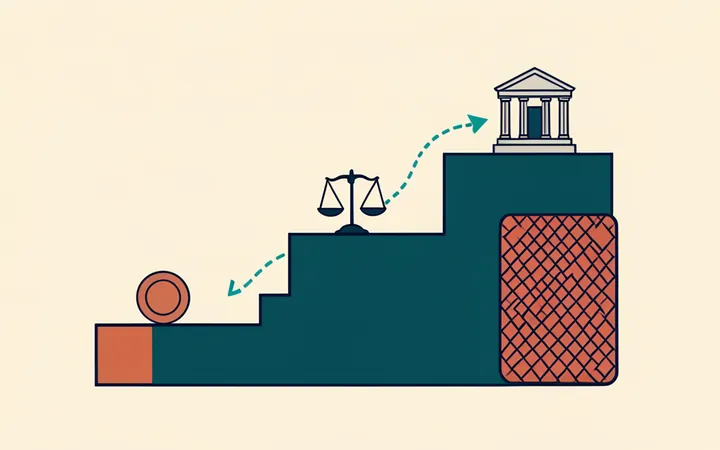
What Zoraveli can and cannot do for you
Zoraveli is a comparison site. We cannot see your account, we are not a party to your contract with any operator, and we cannot complain, negotiate or decide on your behalf. We do not judge whether a complaint is justified.
What we can do is keep our casino files accurate. If an operator’s published rules no longer match what a file says — a new minimum, a changed limit tool, a different support channel — tell us through get in touch and we will re-read the source. How the ledger and our commission work is set out on how this site works.
Questions readers ask
Can I go straight to the Gambling Commission instead of the operator?
You can report a concern to the Commission at any time, but it does not resolve individual disputes. To get a decision on your own case, complain to the operator first and, after 8 weeks, to the ADR provider in its terms.
How long does an operator have to deal with my complaint?
Up to 8 weeks from your first complaint. If it is not resolved by then, you can take it to the ADR provider named in the operator’s terms.
Do I have to pay for ADR?
No. Using the ADR provider named in a UK operator’s terms is free for you. Read its own pages for how it reaches and applies a decision.
My withdrawal is pending. Can I cancel it and keep playing instead?
No. Since 31 October 2021, UK rules mean operators must not offer the option to cancel a withdrawal request. If the request seems stuck, ask for the reason in writing and keep the reply for a possible complaint.
Can Zoraveli contact the operator for me?
No. We have no access to accounts and no role in disputes. We can correct a casino file if the operator’s published rules have changed — tell us on the get in touch page.
What if the dispute is affecting how I feel about gambling?
Take a break before you write anything else. The National Gambling Helpline takes calls free of charge at any hour on 0808 8020 133, and you can set a time-out or self-exclusion on the account while the complaint runs.